The story
- 01
1980s – 2004
Before the channel
The movement’s first venture into broadcasting was Nitharsanam. TamilNet records that a Nitharsanam television service broadcast in Jaffna district during the 1980s.
It was ended by the Indian army in 1987, but two dates are on record. TamilNet: the studios were destroyed on 14 February 1987. The chronicle “On the Journey towards Tamil Eelam”: Nitharsanam was seized by the Indian army at midnight on 9 October 1987.
In November 1990 the Voice of Tigers radio began. It later worked alongside the television service as its sister station under the same media unit.
- 02
26 March 2005
On air
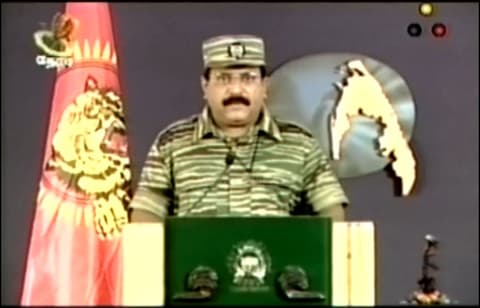
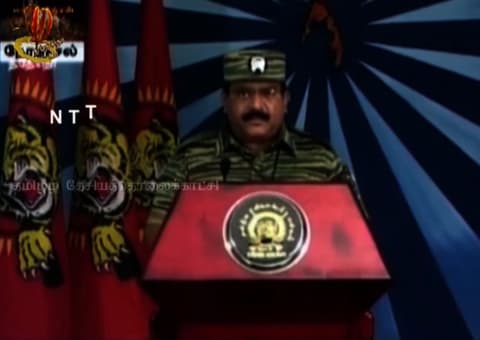
The satellite channel started on Saturday 26 March 2005 at 17:30 GMT. An official of the channel said it would carry only fifteen minutes of news each day for the first two weeks.
The Paris-based Tamil Television Network (TTN) relayed the broadcast to its viewers in Europe at 18:00 GMT. At that point it could not be watched in Asia.
Its logo showed the Karthigaipoo, the gloriosa lily, the national flower of Eelam Tamils.
- 03
July – November 2005
Reaching Asia
On Friday 29 July 2005 at 10 am an event at the Media Co-ordinating Office in Kilinochchi marked the start of broadcasts to Asia. The service was announced for 1 August.
Media unit officials said the new service would reach India, parts of Pakistan, Afghanistan, Bangladesh, Nepal, Myanmar and China for two hours a day, 13:30 – 15:30 GMT.
The media unit announced that daily airtime would rise to 90 minutes from 25 November 2005, and that the leader’s speech would be carried live on Heroes’ Day, 27 November.
- 04
April – May 2007
The satellite dispute
In July 2006 the US company Intelsat acquired PanAmSat, and with it the satellite. The Sri Lankan embassy in Washington said the Tigers had been broadcasting through it for more than a year before that.
In April 2007 Intelsat told the AFP news agency that its satellite was being used “illegally” and that it was pursuing ways to end this. The LTTE spokesman Rasiah Ilanthiriyan, speaking by telephone from Kilinochchi, denied it: “We are accessing it legally and there is no signal piracy.”
It was not clear whether the Tigers reached the satellite through a proxy or on their own; they declined to discuss their arrangement with the service provider.
The Sri Lankan Ministry of Defence announced that Intelsat’s general counsel, Phillip Spector, had reported on 24 April that the transponder had been turned off over the previous weekend.
On 2 May 2007 GlobeCast, a subsidiary of France Telecom, suspended TTN on the instruction of the French broadcasting regulator, the CSA. TTN had 22,000 households in Europe and the Middle East and more than thirty employees.
- 05
2007 – 2009
The final years
Record incompleteIn May 2007 the Sri Lankan embassy complained that the television service and the Voice of Tigers were still on the air. No record has yet been found of which satellite the channel used after that, or for how long.
On 27 November 2007 the Voice of Tigers radio station near Kilinochchi was hit in an air strike. The death toll differs: TamilNet gave 11, Reporters Without Borders nine. That was the radio station; no record has been found of an attack on the television facilities.
Kilinochchi fell to the Sri Lankan army on 2 January 2009. When and how the channel stopped, and what became of its tapes, is not known.